Thursday, July 28, 2011

Results Orientated Youth Leadership training course

Team building game, students have to place an object into a bucket but cannot enter a 4m circle around the bucket


Students engaging in group work

We were fortunate enough to assist at a course for training local youths in leadership skills and result orientated project management. The 3 day course was held in the nearby town of Dhulikhel, with around 25 local youths aged 18 – 25 attending. The objectives of this workshop were to provide local youths with the skills to be effective future leaders in the community and to encourage them to start implementing their own projects.
We were able to teach some outdoor group co-operation games and challenges. It was really rewarding to see the students responding this different style of learning. Most education in Nepal is formal individual textbook based so the small group teamwork challenges were a new beast to the students, after a bit of a learning curve they really enjoyed the challenges. The main challenge for us as facilitators was to get the shy Nepali girls to engage in the activities. These beautiful shy girls seem to be overwhelmed by the more boisterous boys and tend to be very quiet but with some gentle coaching we were able to get them fully engaged. 


The winning team proudly display their unbroken egg after the egg drop game


Team building game, students have to each pass thru a different hole in the 'spider web'


Classroom work

The classroom work focused on project development and leadership and was done in small groups. As most of the work done in Nepali we were unable to be of much assistance but were able to present several topics in English to the students. The final project was for the groups to come up with their own development idea, formulate a plan, present the plan and finally implement the plan in their town or village. The four plans were for an anti smoking campaign, HIV and sexual health awareness, building a local museum and building a community library / learning centre.

Teaching class

I really feel that this style of result oriented learning is a worthwhile method for encouraging growth in Nepal. If true change is to happen it must come from within and these bright young Nepalis are the beginning of a brighter future.    


Class photo

Yvonne with two students, Birkita and Sangita


Monday, July 25, 2011

Khopasi Eye Camp

On Sunday we went to Khopasi village for an eye camp.  274 patients attended the camp, many needed medication or glasses.  14 patients require cataract surgery, this life altering operation costs only $20!! One of Rotary's programs is to help sponser surgery for those who cannot afford it. 

 
Patients registering for eye examination


Waiting in queue

Waiting for vision test

1st stage of vision testing


Lunch venue

The kitchen


One of the patients needing cataract surgery

Another person in need of cataract surgery

And another


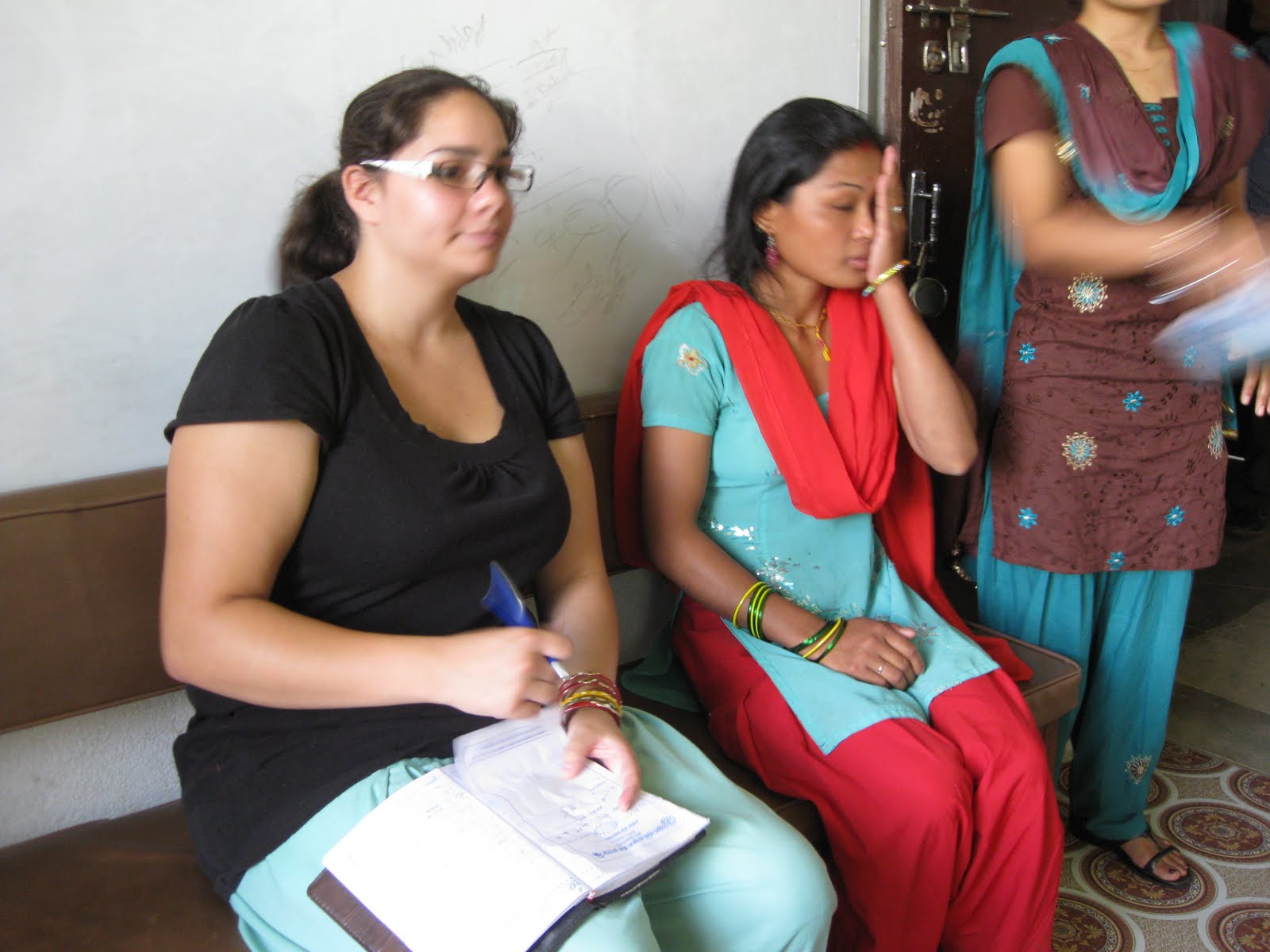
Monica is only 20 - she needs cataract surgery in both eyes!


A little girl terrified of the strange man with dreads pointing a scary camera at her...

School children who came for an eye test

Thursday, July 21, 2011

Buy a goat.


CDRA has a child education / poverty reducing scheme in which poor families who are struggling to send their children to school are sponsored with a goat to cover the school costs. Previously a child sponsoring program was in place in which the children’s education costs were met by donors. This was a good program but it is more efficient to sponsor the child’s family with a female goat so that the family produces the income to send the child to school. A goat will produce 2 kids a year which can be sold for around 3000 – 5000 rupees each, or kept to increase the earning potential for the family. School costs are estimated at 2500 rupees a year per child (this covers uniforms and books). So instead of continuously depending on donors to fund the child’s education year after year, one donation can cover many years of schooling. The goats are donated on the condition that the children are sent to school and checks are conducted. Often the children are responsible for the care of their goats, providing basic business education as well.

A goat will cost USD$50 or NZD$60 each. This will provide one vaccinated nanny goat and a short course in goat care. Below are some of the examples of the families that have been bought to our attention that are in need of assistance. This is a tiny proportion of the many families we have on our books waiting for help. Please get in touch if you feel like helping not only a child receive an education but also their whole family.  


Name : Mrs.  Ambika Dhital      Age : 45
Address: Patlekhet Village, Nepal
Children:  3 ( 2 Son, 1 daughter)
Economic condition: Husband ill, poor economic condition, subsistence farming, not enough food to eat, cannot afford education cost to her children.
Request to CDRA: To buy a pair of goat which provide income to cover education costs


 Name : Mrs.Sumitra Dhital    Age : 34
Address: Patlekhet Village, Nepal
Children: 4 ( 2 Son, 2 daughter)
Economic condition: She is in poor health and her children are taking care of domestic needs. Her children take care of domestic animals. She is requesting for 2 pair of goat to support her economic condition and spent money for her treatment and education costs for her children.

Name : Mrs. Kaili Tamang    Age : 46
Address: Kushadevi  Village, Nepal
Children: 2 ( 1  Son  1 daughter)
Economic condition: Her husband died 4 years ago she is alone with her 2 children. No regular income depends on domestic animals for income. She needs help to grow more goats to boost income.


A day of Visa Bureaucracy

Yesterday we took the bus to Kathmandu to pick up our visa’s for India (we went and applied for them last week).  The bus trip is always an experience.  It takes a good 1.5 hours to travel the 35 odd km’s from Banepa to Kathmandu, with the bus becoming progressively more crowded on the way.  Ben’s far too tall for the Nepali buses, he has to stand bent double and can’t fit into most of the seats due to the lack of leg room.  Bus fares can’t be complained at though with the trip costing around $NZ1 for both of us.
We arrived at the Indian embassy to be told our visas were not yet ready for us (clearance from Wellington has not yet come through).  We proceeded onto the Chinese embassy to discover they were closed (despite what the website says!). So very unproductive on the visa front.  We are in the process of planning a short break out of Nepal at the end of August – due to conditions on the Nepali visa. 
Ben getting Dread-locks

We made the most of our trip into Kathmandu – getting a steak for lunch (a delicious treat) from the Everest Steak House.  Ben spent 4 hours getting his hair dread-locked, while I enjoyed shopping in the Thamel’s touristy shops.  Everything is done by bargaining which gets quite tiring!
We made it home in time to help Rina cook momos for dinner.  Basically a momo is a steamed dough ball filled with minced meat and/or vegetables.  These are a traditional dish in Nepal – very tasty.  We had a very enjoyable feast with all the volunteers here. 

Making Momo

Tuesday, July 19, 2011

The Birth of a New Rotary Club


On Saturday Night (16th July 2011or 1st of Shrawan 2068 on the Nepali Calender) we were lucky enough to be invited to the Charter Presentation Ceremony for the Rotary club of Madhyapur. Madhyapur, also known as Thimi is a beautiful and historic Newari town close to the capital in the Kathmandu valley. Visitors to Madhyapur can enjoy the many ancient temples and festivals as well as traditional Newari handicrafts.The new Rotary club has been sponsored by RC Dhulikhel (see our post on RC Dhulikhel) with rotarians from Dhulikhel providing support and mentoring to the Madhyapur club throughout the chartering process. It is very inspiring to see a dedicated group of Nepalis who want to join Rotary to make a difference in their community. Joining Rotary means that this group of locals will be part of an international service club with over 1.2 million members all of whom are committed to community service. This provides an amazing resource for the members of RC Madhyapur to help their community.


The evening was a really grand affair with approximately 150 people present; local rotarians, dignitaries, distinguished foreign guests (that's us!), spouses and children. All the women were dressed in beautiful saris, and a band played throughout the proceedings. The new club already has 39 members. Its the 76th Rotary Club in Nepal.


The formalities and speeches were conducted in English (a blessing to us novice Nepali speakers) and the robes and gavel were handed to Rtn. Surendra Bikram Prajapati the Charter President of Madhyapur Rotary Club to great applause. After the ceremony a delicious dinner was enjoyed followed by some rakshe (local wine). All in all it was a very nice evening and as privilege to see the birth of a new Rotary Club.

Saturday, July 16, 2011

Helping people help themselves

OK people it’s about time you learnt a little bit about CDRA and how they operate
CDRA stands for Community Development Relief Agency and is the organization we spend most of our time working for here in Nepal. CDRA (pronounced Seedra which is also the name of a delicious small dried fish but I digress) is a small NGO (Non Governmental Organization) based in Banepa. The motto is ‘helping people help themselves’ which is apparent in the projects undertaken by CDRA. The projects tend to be small scale and of immediate benefit to the recipients, such as micro finance, education and school construction. Unlike some large (well huge) international NGO’s and aid agency’s CDRA utilizes local involvement in its projects as much as possible. The benefits of this are twofold, firstly the costs and overheads are kept to a minimum (No cruising round in convoys of the latest Landcruisers for us) and also the locals take ownership of the project and take pride in the results. A good example is for a school build the local village will supply local stone for the construction. The villagers will quarry the stone and provide labour for the building construction. This means the villagers have a sense of ownership of their school, more so than if we plopped a pre fabricated building down and said ‘here you go’. This also means costs are significantly lower by utilizing local resources such as bamboo, wood and stone. It’s probably more environmentally friendly too when you think about it.
CDRA also encourages community involvement in all its projects. This means that locals are exposed to the entire process of the project instead of just the end result and can get ideas for projects of their own.  It is quite gratifying seeing some villages transform from asking for handouts to developing their own plans and completing their own projects. They really are helping themselves.  
CDRA has many projects on the go. All the projects in this blog so far have had help by CDRA in some way. If you would like to make a significant difference to peoples’ lives in a meaningful way please support one of our projects. They can range from $20 for a cataract operation to $50000 for a new high school, (I’ll blog that one soon, it’s a doozy) and everything in between. Full receipts and documentation will be provided for any donation and you will be secure in the knowledge that your money is being utilized in the most efficient way possible.

Thursday, July 14, 2011

MEND, Mobility Equipment for the Needs of the Disabled

http://www.mend.org.nz/

While we were in Kathmandu getting our visas for a quick trip to India we were introduced by Ashok to a bloody top kiwi bloke called Rob. Rob has set up MEND and has worked providing mobility to rural Nepalis for over 20 years. Check out http://www.mend.org.nz/ to see more of the good work they do.
If anyone is coming, or knows anyone coming to Nepal from NZ or Aussie MEND always can use any extra luggage space for donated mobility equipment to try and beat huge transport costs. Get in touch with us or directly with MEND thru their website